Umeboshi are traditional Japanese pickled plums made by preserving fully ripened ume fruit with salt, then drying them in the summer sun. Red shiso leaves are often added during the pickling process, giving the plums their characteristic red color and fragrant aroma. Umeboshi are known for their intensely salty, tangy flavor and have long been valued as both a preserved food and a staple of Japanese home cooking.
********
The other day, I started making this year’s umeboshi (Japanese pickled plums).
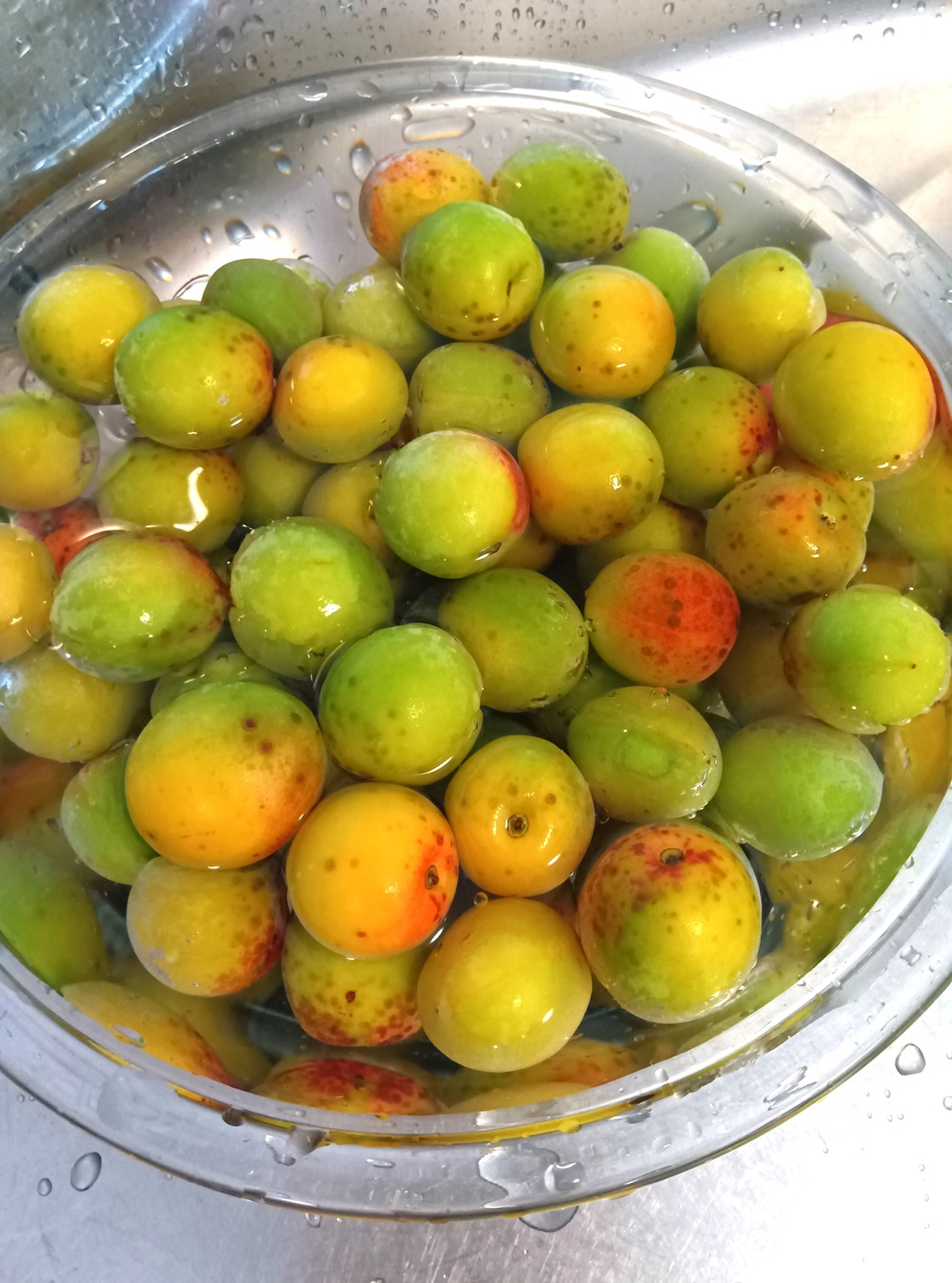
Fully ripened plums are used to make umeboshi.
If you leave green ume plums at room temperature for a few days, they continue to ripen, gradually turning yellow and developing a sweet, fruity aroma.
The first year I made umeboshi, I didn’t let the plums ripen first—I pickled them while they were still green.
The result was rock-hard umeboshi! 😂
In my second year, I dried them in the sun for too long, and they became rather shriveled, with a lot of salt crystallizing on the surface.
In the third year, I completely missed the short season for fresh red shiso leaves, so I ended up using pre-salted packaged shiso instead.
And now, in my fourth year, everything has been going smoothly so far!
I hope it continues this way until it’s time for the final sun-drying process during the midsummer “Doyo” period. 😊
Here are this year’s plums.
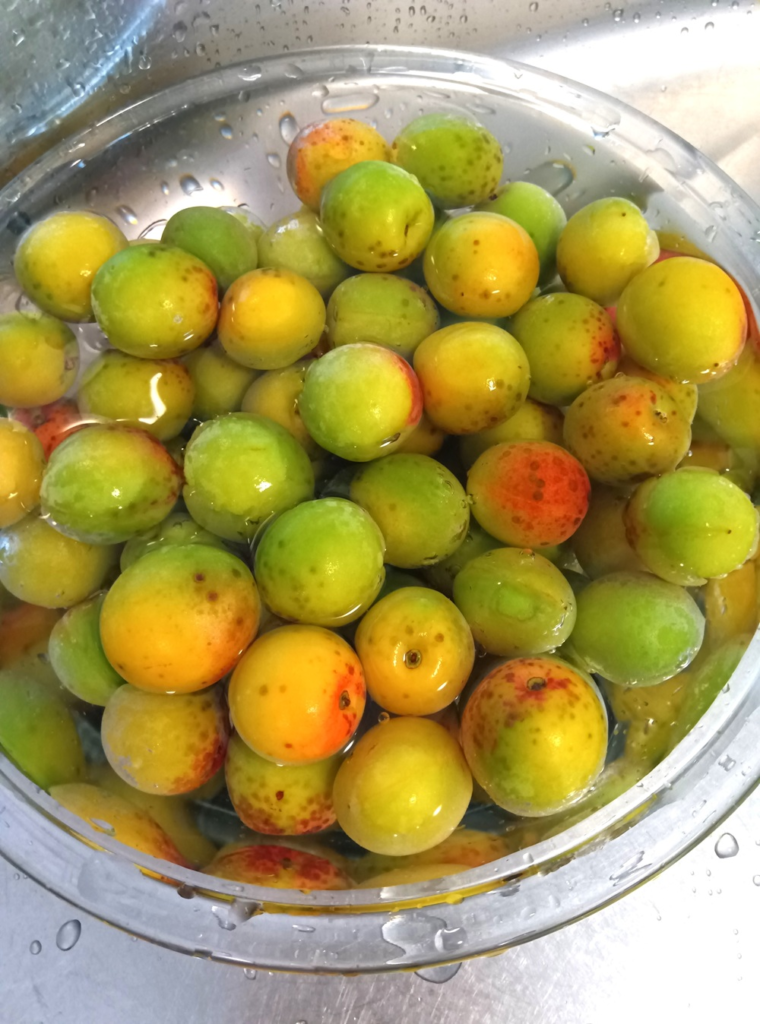
They were sent directly from a naturally cultivated farm.
This is 1.5 kg, but I actually pickled twice this amount—a total of 3 kg.
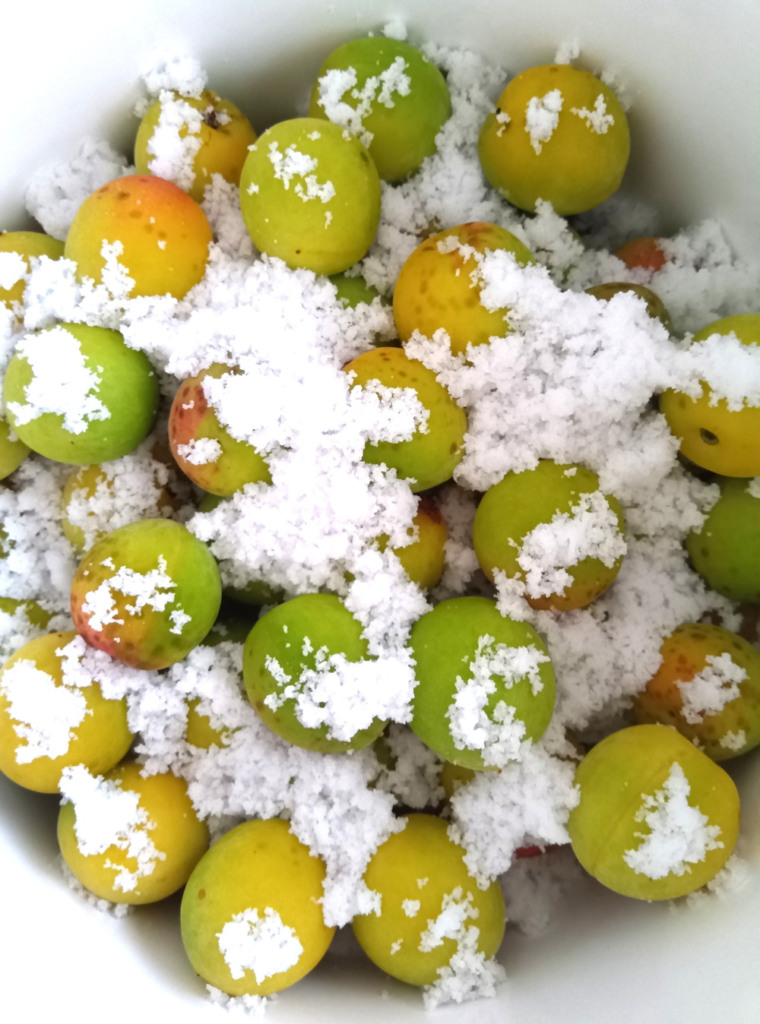
After gently washing the plums and draining off the excess water, I layered them in a container like this:
salt → plums → salt → plums.
For the salt, I used Umi no Sei Arashio sea salt at 18% of the weight of the plums.
Since I had 3 kg of plums, I used 540 g of salt.
Be careful not to reduce the amount of salt, as that makes mold much more likely to develop.
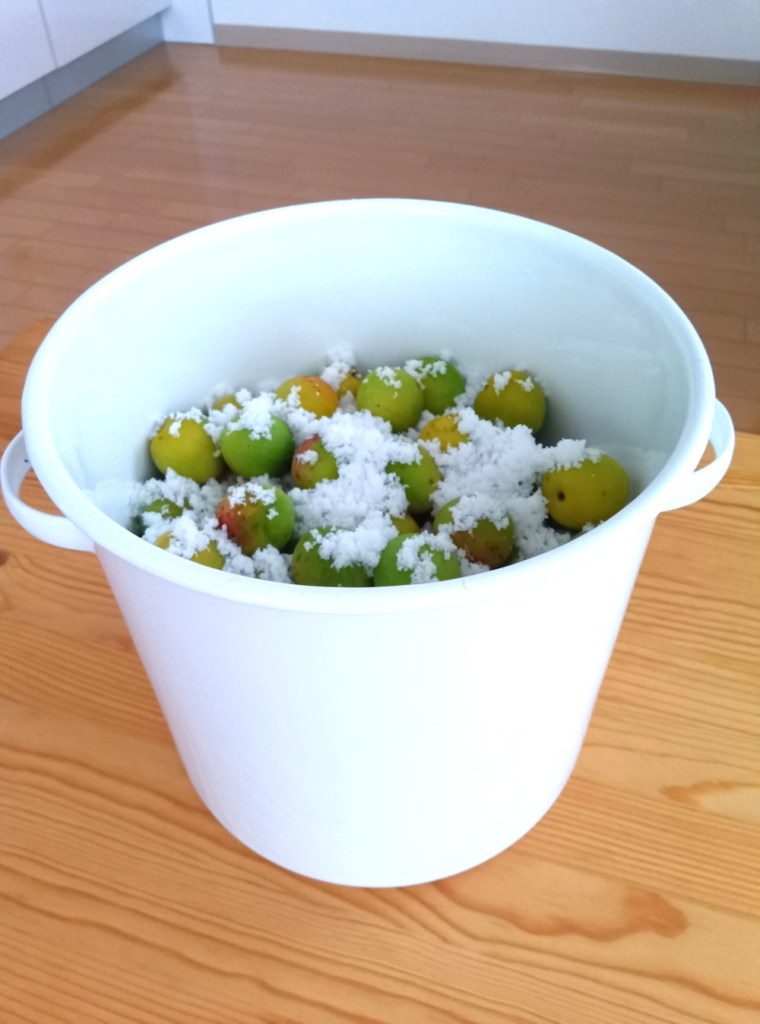
Once all the plums and salt were layered in the container, I placed a weight on top and waited for the plum vinegar (umezu) to rise.
This time, it took only two to three days for enough umezu to come up and completely cover the plums.
If the weight is too light, the umezu may not rise sufficiently, leaving parts of the plums exposed, which can easily lead to mold.
Using a weight that’s heavy enough is one of the keys to successful umeboshi.
A good guideline is to use a weight about twice the weight of the plums.
So for 3 kg of plums, you’ll need about 6 kg of weight.
I placed a drop lid over the plums and then set the weight on top.
This year, I improvised by using two Shinshu-yaki ceramic plates, a steaming rack, and bottles of water, then covered the whole setup with plastic wrap.
Ideally, I’d use a traditional stone weight, but they’re surprisingly difficult to find.
Plastic-coated weights tend to have an odor that I don’t really like, so I make do with things I already have at home.
Before long, fresh red shiso came into season, so it was time to prepare it.
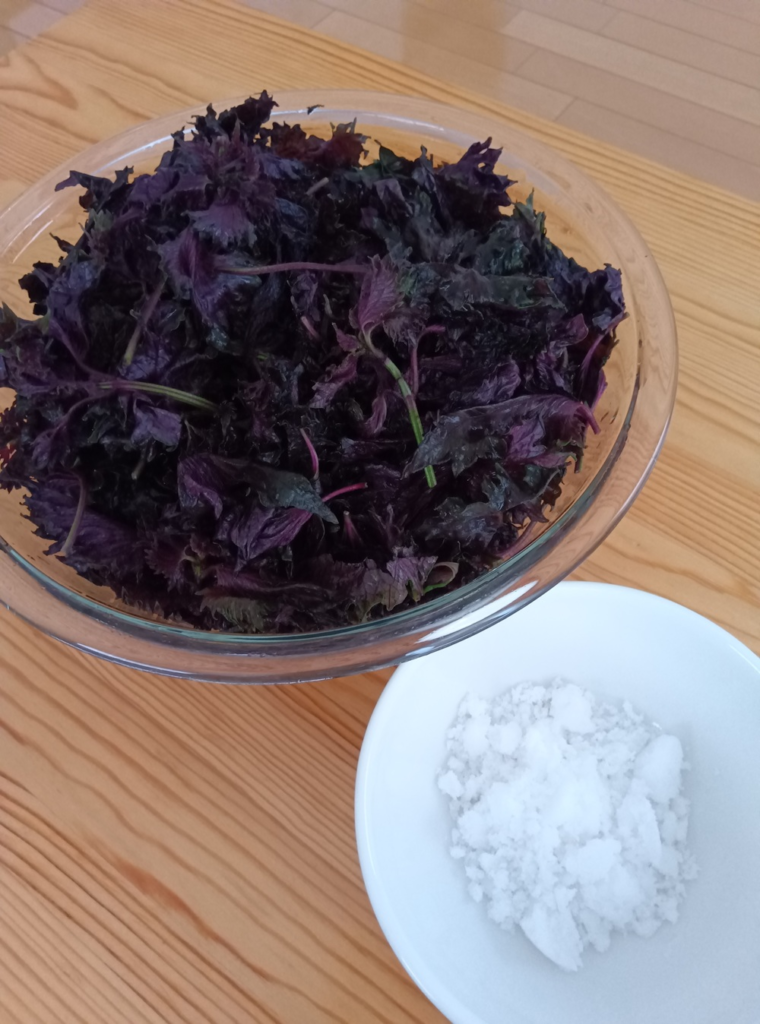
Here are 300 g of red shiso leaves.
I used 60 g of salt.
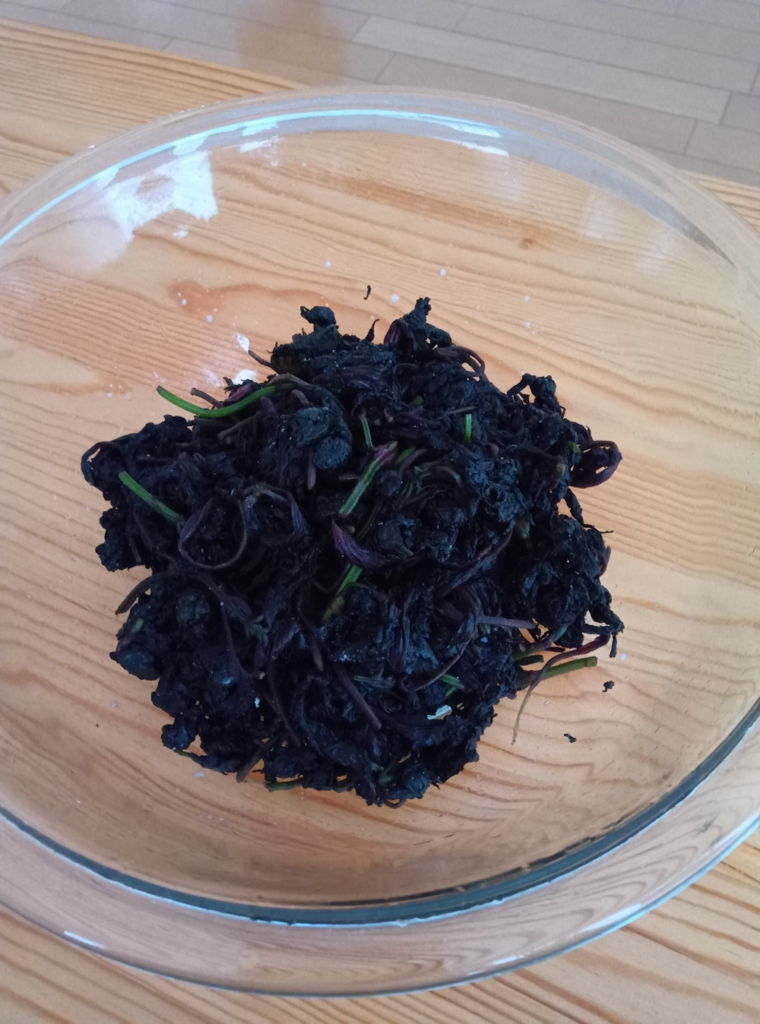
After washing the leaves, I added the salt in two batches and kneaded them well to remove their bitterness.
As you can see, the leaves shrink dramatically!
Next, I temporarily removed the plums from the container.
Here are the plums and the white umezu.
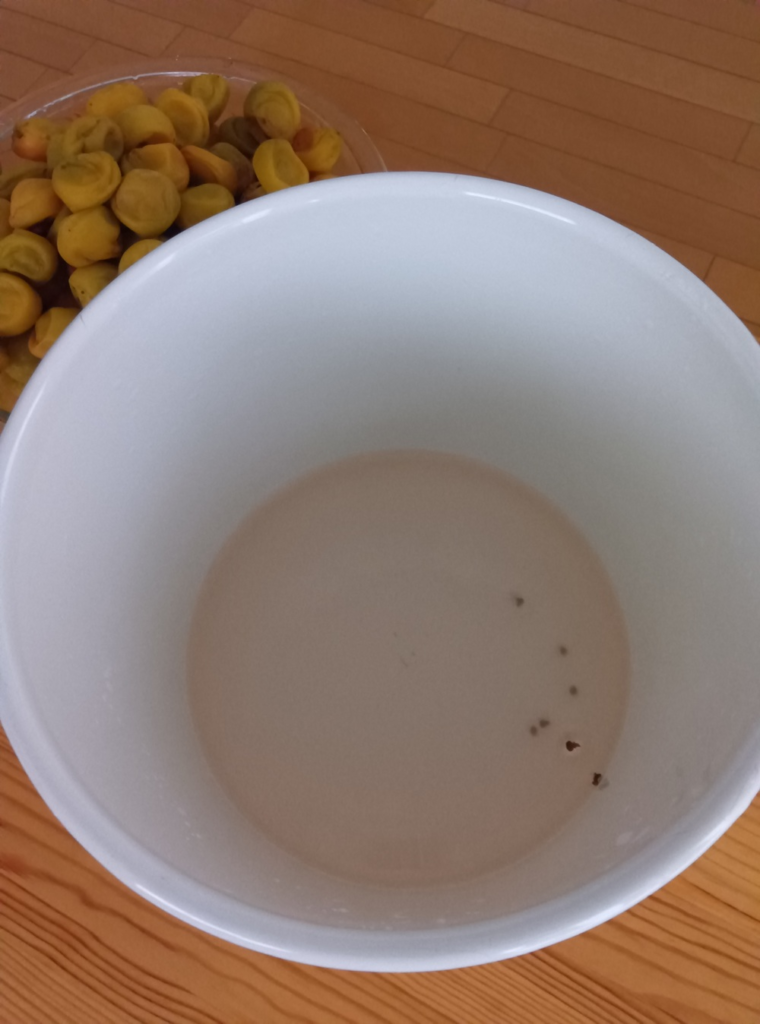
When I added the prepared red shiso to the umezu, the liquid turned into a beautiful deep red.
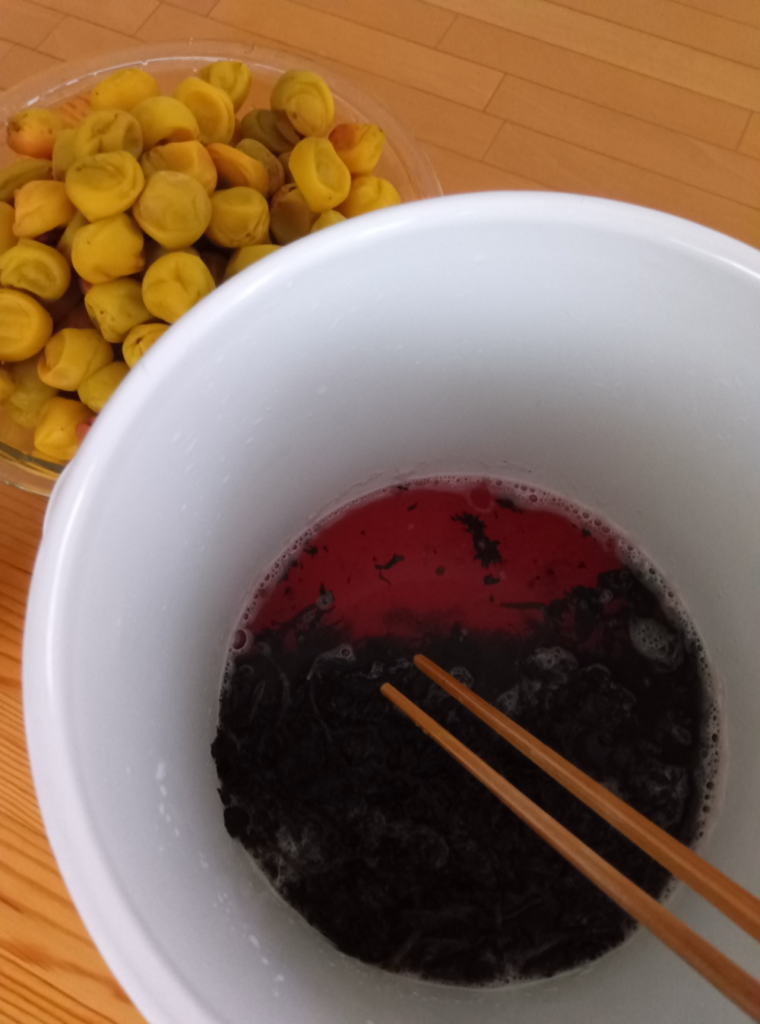
I then removed the shiso again and layered everything back into the container:
plums → shiso → plums → shiso.
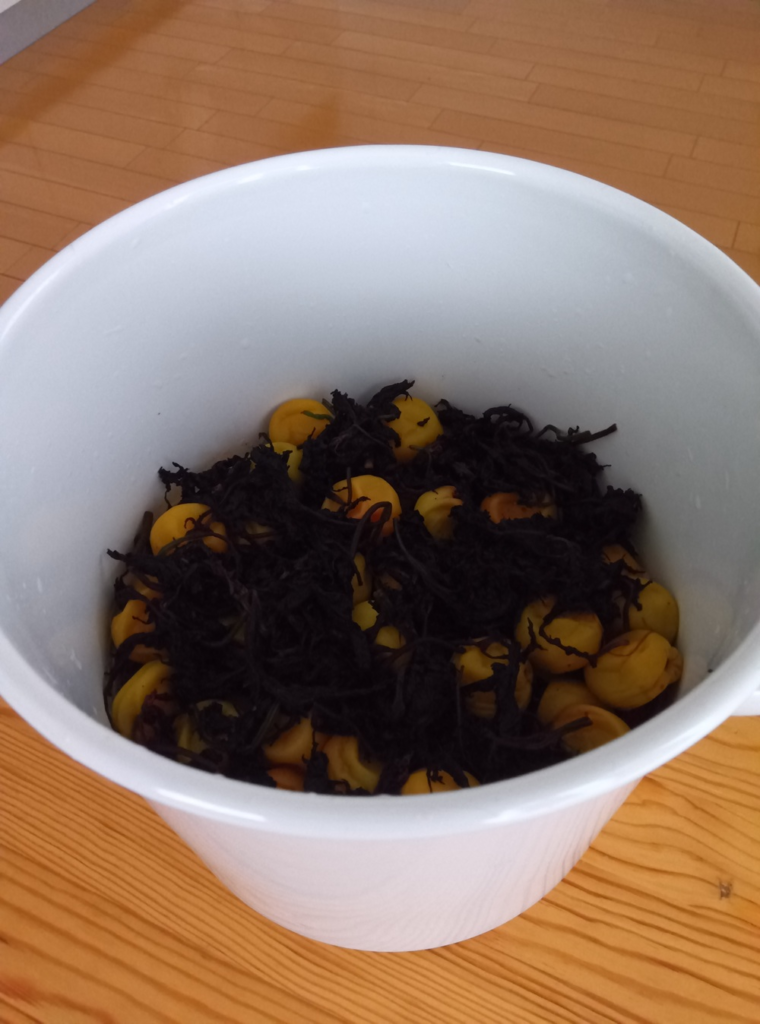
Now all that’s left is to place a lighter weight on top and store the container in a cool, dark place until it’s time for the Doyo sun-drying.
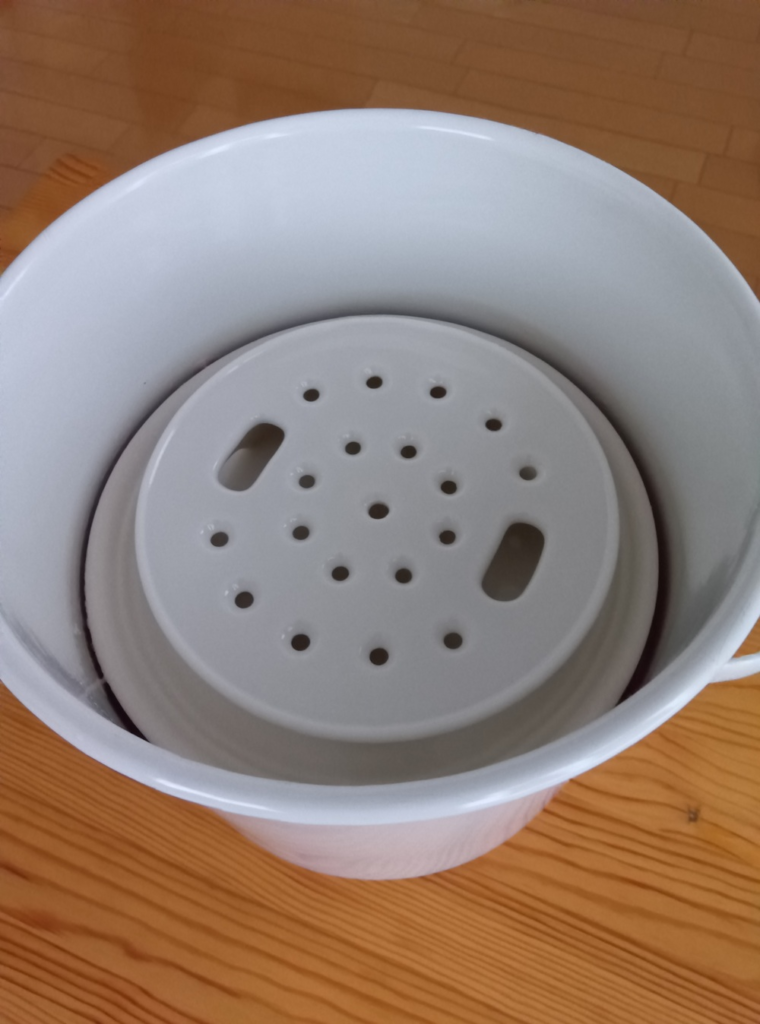
This time, the weight consists of the two Shinshu-yaki plates and the steaming rack, totaling about 1.2 kg.
The important thing is to keep all of the plums submerged in the umezu.
As it happens, the Shinshu-yaki steaming rack—which I accidentally bought in the wrong size—turned out to be perfect for this purpose!
It ended up being useful in a completely unexpected way.
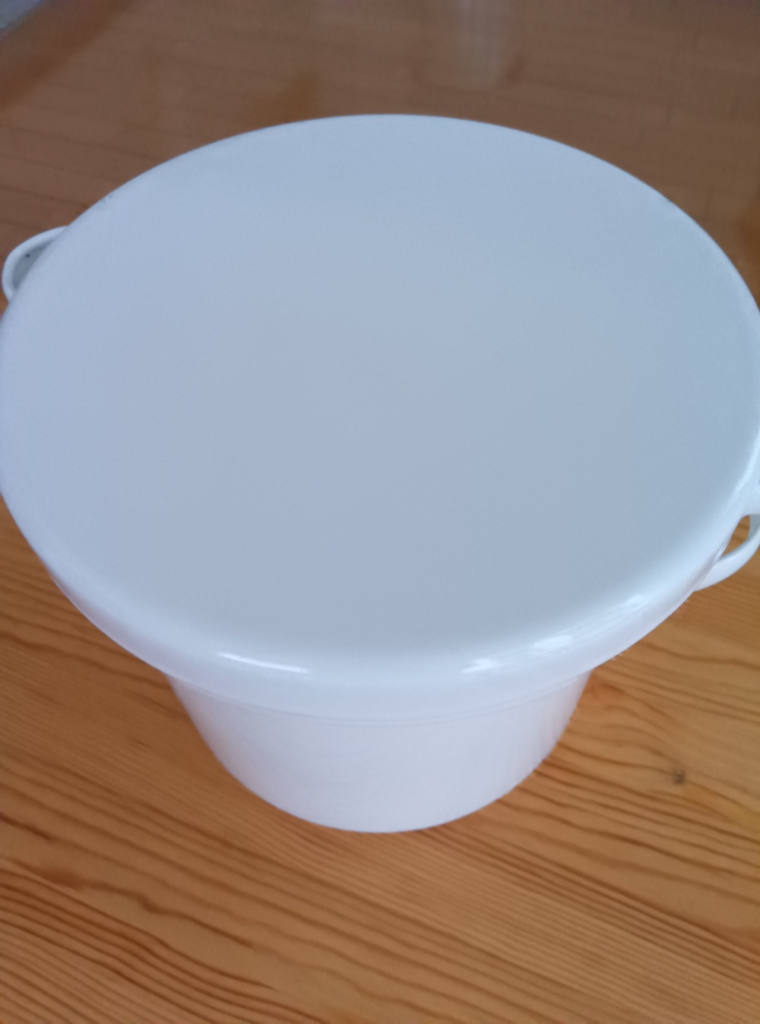
Now I simply put the lid on and wait for the sunny days of Doyo.
I can’t wait to see how delicious they become! ✨
Thank you so much for reading today!
During the rainy season, take good care of yourself and don’t overdo it. 😊